Product FAQ
Why Does a Diesel Generator Emit White Smoke in Winter?
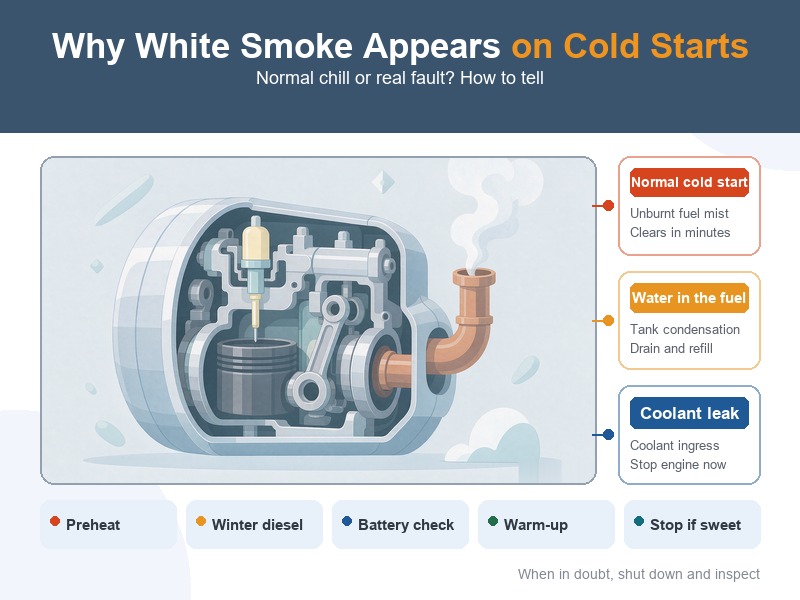
As cold weather settles in, service teams hear the same question again and again: the generator starts, but a cloud of white smoke rolls out of the exhaust. In most cases the phenomenon is harmless and disappears within a few minutes of warm-up. Sometimes, however, it is the first symptom of a problem that can ruin an engine. Knowing which kind of white smoke you are looking at is a genuinely useful skill for any operator of standby power.
Unburnt fuel mist, not a fault. Diesel engines rely on compression ignition, which depends on the heat generated when air is squeezed in the cylinder. On a cold morning, cylinder walls, intake air and coolant are all below normal operating temperature, so atomised diesel cannot burn completely. The unburnt fraction leaves the exhaust as a fine oil mist that appears white or pale grey. This is exactly why glow plugs and intake air heaters exist. The smoke of a normal cold start has no sharp fuel smell, the engine settles to a steady idle, and the haze fades once the coolant reaches working temperature.
When fuel quality is the culprit. White smoke that persists after warm-up usually points to the fuel system. Water is the most common offender: partially filled tanks breathe in humid air, condensation accumulates overnight, and water carried into the cylinders flashes into steam. Draining the water separator, replacing the fuel filter and inspecting the tank will usually confirm it. Worn injector nozzles that drip instead of atomising, retarded injection timing, and low compression from worn rings or leaking valves produce the same persistent haze. If white smoke continues once the engine is hot, stop guessing and have the injection equipment and cylinder compression checked.
The one cause you must not ignore. White smoke with a distinctly sweet smell means coolant is entering the combustion chamber, typically through a failed head gasket or a crack in the head or block. The supporting evidence is easy to find: a rising oil level with a milky appearance on the dipstick, unexplained coolant loss, or a steady stream of bubbles in the expansion tank with the filler open. Continuing to run an engine in this condition risks hydrolock and severe mechanical damage. Shut the unit down immediately and arrange inspection before the next start attempt.
A five-minute winter checklist. Before the coldest months, a short routine covers most white-smoke incidents. Watch the clock: smoke that clears within roughly ten minutes of warm-up is weather, not a fault. Check the engine oil for a milky tint. Note the smell of the exhaust. Drain the water separator and refill with winter-grade diesel where ambient temperatures demand it. Finally, test the glow plugs or intake heater and confirm battery condition, because cranking speed drops sharply in low temperatures and slow cranking alone can prolong the haze.
For standby sets that sit idle for most of the year, a scheduled warm-up under load before winter, fresh fuel and a verified preheating system prevent the vast majority of cold-start complaints. Operators planning winter projects should also size battery capacity and preheating for local ambient conditions rather than relying on nameplate data alone. ZIMBON (Yunnan Zhenbang) supplies diesel generating sets from 5 kW to 2500 kW and advises customers on cold-climate configuration; the practical rule remains the same for every brand. Brief white haze on a cold morning is just weather. Persistent white smoke is a symptom, and it always deserves a closer look.
Categories
News
Contact Us
Contact: yuchai Generator Set
Phone: +86 13312561188
Tel: +86-0871-67352758
E-mail: postmaster@zimbon.com
Add: 11th Floor, Office Building C, Shuangcheng Intercity Business Center, No. 8868 Guangfu Road, Guandu District, Kunming City, Yunnan Province, China